
Area
B. STRUCTURAL MATERIALS
- B1 – Advanced steels
- B2 – Light weight alloys
- B3 – High-temperature alloys and intermetallics
- B4 – Advanced structural ceramics
- B5 – High entropy materials
- B6 – Fatigue, wear and corrosion of materials and structures
- B7 – Materials characterization, testing and mechanical properties
- B8 – Hydrogen embrittlement of structural materials
- B9 – Novel theory and data driven materials design for structural applications
- B10 – Construction Materials
Area CoordinatorS

Prof Dr. Francisca G. Caballero
National Center for Metallurgical Research (CENIM-CSIC) (ES)
Prof Dr. Greg Haidemenopoulos
University of Thessaly / Department of Mechanical Engineering (GR)
B1 – Advanced steels
Scope
This symposium explores cutting-edge developments in advanced steels, bridging fundamental science and practical applications. We focus on innovative design methodologies, processing techniques, and performance evaluation of novel steel grades. The symposium emphasizes the critical link between processing, microstructure, and properties, utilizing advanced characterization techniques from atomic to macroscopic scales. By fostering collaboration among materials scientists, metallurgists, industrial researchers, and end-users, we aim to accelerate innovation in structural steel technology, addressing future challenges and driving the next generation of high-performance steels.
Description
The next generation of advanced steels holds the key to addressing future challenges in structural materials. This symposium delves into the intricate mechanisms governing phase transformations and the complex interplay of processing, microstructure, and properties in steel technology. We explore a wide range of topics, from novel sustainable steel design concepts and computational modeling to advanced processing techniques and their impact on microstructure.
In-situ characterization methods play a crucial role in understanding phase transformations, providing insights that drive innovation in steel development. The symposium also addresses emerging applications of high-performance steels across various industries, considering sustainability and lifecycle aspects in the development process.
By bringing together diverse perspectives from academia, industry, and end-users, we create a unique forum for knowledge exchange and collaboration. Participants will have the opportunity to discuss the latest advancements, challenges, and future directions in advanced steels.
Join us in shaping the next chapter of structural steel technology, where fundamental understanding meets real-world impact. This symposium aims to inspire new ideas, foster partnerships, and accelerate the development of innovative steel solutions for tomorrow’s challenges.
Targeted topics
- Novel steel design concepts and computational modeling
- Advanced processing techniques. Impact on microstructure and properties.
- Microstructure characterization. In-situ characterization methods. Multi-scale analysis techniques
- Emerging applications of high-performance steels in various industries
- High resolution characterization techniques (e.g. TEM and APT)
- Partitioning of alloying elements, segregation to interfaces
- Transition of the steel industry towards a scarp based production. Impact of increased tramp and trace elements.
- Sustainability in steel development. Lifecycle considerations and assessment.
- Novel steel concepts for the use in harsh environments (e.g. hydrogen gaseous and liquid).
OrganizerS

Prof. Ronald Schnitzer
Montanuniversität Leoben (AT)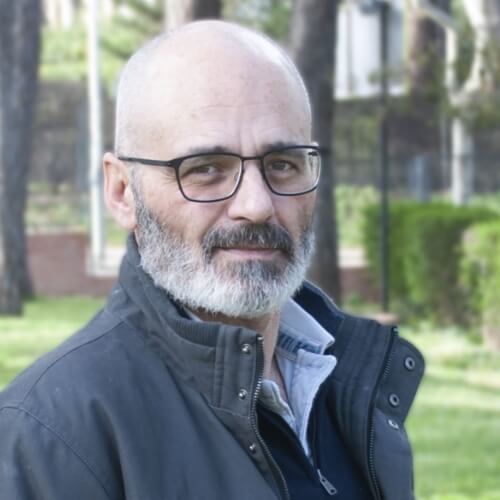
Dr. Carlos Garcia-Mateo
CENIM-CSIC (ES)
Dr. Matthias Kuntz
Robert Bosch GmbH (DE)
B2 – Light weight alloys
Scope
The Symposium on Light Weight Alloyscovers all aspects of lights alloys including magnesium, aluminum, titanium and high entropy light alloys, both the alloys themselves and metal matrix composites. The scope includes raw materials, alloy manufacturing including casting, extrusion, deformation, joining and machining, additive manufacturing, corrosion and surface treatment, modeling, mechanical properties, development of new alloys, recycling and applications in all fields including transport, energy, healthcare, and constructions.
Contributions related to novel materials or processing techniques such as additive manufacturing or nanostructuration, and postprocessing methods such as heat treatment, surface treatment, or coatings are welcomed.
Description
Light weight alloys, such as aluminum, magnesium, and titanium are key materials for the development of many technologies to improve our lives and enable us to achieve a sustainable future.
Lightweight alloys feature a unique combination of strength, durability, and low density. They are key in the automotive and aerospace industries, where weight reduction leads to better fuel efficiency, lower emissions, and improved performance.
These alloys are cost-effective compared to other lightweight materials, aluminum and titanium show high corrosion resistance, most can be fabricated by many routes to complex shapes using conventional and additive manufacturing processes. In addition, they can be recycled indefinitely, and magnesium and titanium feature high biocompatibility.
All these properties of light alloys and composites enable designers and engineers to create more innovative and efficient products in many industries.
This symposium will be a meeting point for light alloys professionals and researchers to share their knowledge, showcase their advances, and discuss the exciting present and future of light alloys and composites.
With the expected contributions, the symposium will be an excellent opportunity for knowledge exchange and networking for all the participants.
Targeted topics
This symposium will cover, but is not limited to, the following range of topics:
- Alloy design of aluminum, magnesium, titanium and high-entropy alloys.
- Light weight metal matrix composites.
- Cellular materials, and foams.
- Additive manufacturing of light weight alloys.
- Advanced processing and nanostructuration.
- Performance evaluation of light weight alloys: mechanical, thermal, electrical, biocompatibility, wear, corrosion, …
- Novel testing and multiscale characterization of light weight alloys.
- Modeling and simulation.
- Improvements in sustainability, recycling, and life cycle of light weight metals.
OrganizerS

Prof. Joaquin Rams
Rey Juan Carlos University (ES)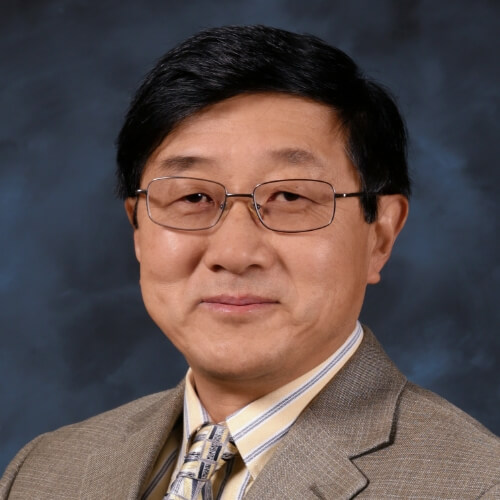
Prof. Alan A. Luo
The Ohio State University (US)
Dr. Calin D. Marioara
SINTEF Industry (NO)
B3 – High-temperature alloys and intermetallics
Scope
Today, the demand for materials that can operate efficiently at ever higher temperatures is driving research activities in many industrial sectors. This is particularly true in the power generation, aerospace and automotive sectors. The transition to low-carbon energy production poses a number of technological challenges. One of these is to improve the efficiency of energy production systems in order to minimize the use of resources. It is well known that the best way to increase efficiency is to increase the process temperature. Thus, low-carbon energy technologies as diverse as fuel cells and hydrogen, concentrated solar power, bioenergy, geothermal and sustainable nuclear have in common the need to operate at temperatures above 400°C and up to 1000°C. These extreme operating conditions, i.e. high temperature operation in an aggressive environment, require the use and development of alloys that maintain their integrity for a sufficiently long time at a reasonable cost.
Description
This symposium will focus on the understanding processing–microstructure–property of high temperature resistant alloys and intermetallics for structural (e.g. in energy production systems) and functional applications. Topics of interest include:
- Development of new materials with superior creep and/or corrosion resistance at high temperature
- Improvement of material performance at high temperatures by tailoring chemical composition or thermomechanical process
- Advanced characterization techniques to assess high temperature mechanical properties and corrosion resistance
- Advanced tools to accelerate the materials development process, e.g., by the use of high throughput characterization techniques, artificial intelligence algorithms, automatization of process, experimental study and modeling of phase diagrams…
Experimental and modeling contributions are welcome.
Targeted topics
- Alloys
- Intermetallics
- High-temperature
- Structural properties
- Functional properties
- Creep
- Oxidation
- Materials design
- Calphad
OrganizerS

Prof. Marta Serrano
CIEMAT (ES)
Dr. Jean-Marc Joubert
CNR (FR)
B4 – Advanced structural ceramics
Scope
The symposium is built to gather new research on structural ceramics, with a focus on the mechanisms by which these materials can be used as structural parts for multiple applications.
Description
Advanced structural ceramics are key materials in a wide range of fields, covering areas including energy production, environment, space, transportation, medicine, optical systems and microelectronics. This symposium will provide a forum for researchers, students, and entrepreneurs to present and discuss the ongoing trends in the new generation of advanced ceramics for structural applications, covering both oxide and non-oxide compositions, to be employed as monoliths, hard coatings, thermal barrier coatings, composites and/or layered architectures as well as in hybrid structures either in ambient conditions or extreme environments.
Targeted topics
- Advanced processing and its relationship with microstructural development
- Damage-tolerant structural ceramics
- Multiscale models and in-situ experiments to understand damage mechanisms
- Deformation mechanisms based on phase transformation, dislocations or shear banding
- Thermo-mechanical response in relevant environments
- Structural bio-ceramics
- Hard Coatings, Max Phases, UHTC, High Entropy Ceramics
OrganizerS

Prof. Florian Bouville
Imperial College London (UK)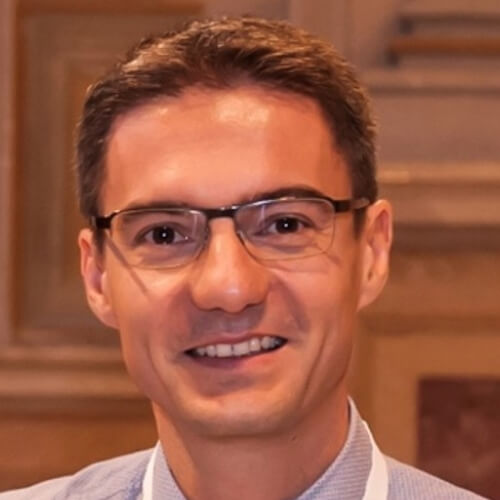
Prof. Jérôme Chevalier
Insa Lyon (FR)
Dr. Laura Silvestroni
CNR-ISSMC (IT)
B5 – High entropy materials
Abstract
This Symposium will provide a venue for presentations of research progress on the most recent experimental discoveries and theoretical modeling of high-entropy/medium-entropy alloys (HEAs/MEAs) and related compositionally complex alloys (CCAs), covering alloy design, processing, microstructures, and structural and functional properties. Presentations dedicated to other types of high-entropy materials, for example, high-entropy ceramics, are also welcomed.
In contrast to conventional alloys, which are mainly based upon one or two principal elements, HEAs/MEAs or CCAs have multi-principal elements, often three or more. Depending on the type and contents of alloying elements, HEAs/MEAs or CCAs are mainly dominated by face-centered-cubic (FCC), body-centered-cubic (BCC), and hexagonal close-packed (HCP) structures. Carefully designed HEAs/MEAs or CCAs possess tailorable properties that compete and, in some cases, surpass conventional alloys. Depending on alloy systems, such properties include strength, ductility, corrosion and oxidation resistance, fatigue and wear resistance, and functionalities like superconductivity, thermoelectricity, hydrogen storage and catalysis. These properties will undoubtedly make these new materials of interest for use in various structural and functional applications. Given the novel and exciting nature of HEAs/MEAs or CCAs, the research area is seeing a rapid growth.
Scope
This symposium provides a platform for researchers, scientists, and engineers to present their newest theoretical and experimental research findings on multiple topics pertaining to the structural and functional properties of high-entropy/medium-entropy alloys (HEAs/MEAs) and related compositionally complex alloys (CCAs).
Description
HEAs/MEAs or CCAs consist of three or more primary elements and are mainly composed of body-center-cubic (BCC), face-centered-cubic (FCC), and hexagonal-close-packed (HCP) solid-solution phases. These alloys can exhibit desirable properties including high strength and ductility, excellent corrosion and irradiation resistance, and high fatigue/wear resistance. Such desirable characteristics make HEAs/MEAs or CCAs potential candidates for various applications including those in the aerospace, automotive, biomedical, and energy industries. Other than alloys and in the bulk form, high-entropy ceramics and one-dimensional and two-dimensional high-entropy nanoparticles and high-entropy MXenes are new excitements that are brought to the family of high-entropy materials.
Targeted topics
- Material preparation and processing, such as casting, powder metallurgy, additive manufacturing, severe plastic deformation, and thermomechanical treatments
- Advanced characterization, such as synchrotron and neutron scattering, three-dimensional (3D) atom probe tomography, SEM and TEM
- Mechanical behavior, such as fracture, fatigue, creep, and micro/nano-mechanics
- Functionality, such as magnetic, electric, thermal, catalytic and biomedical behavior
- Corrosion and oxidation behavior
- Wear and tribological behavior
- Hydrogen storage and hydrogen embrittlement
- Coatings and surface treatment
- Combinatorial alloy design and high throughput screening
- Theoretical modeling and simulation using density functional theory, molecular dynamics, Monte Carlo simulations, phase-field and finite-elements method, and CALPHAD modeling
- Machine learning and artificial intelligence applied to the discovery of novel HEAs/MEAs or CCAs
- 1D and 2D high-entropy materials including for example high-entropy nanoparticles and high-entropy MXenes
- Industrial applications
OrganizerS

Prof. Sheng Guo
Chalmers University of Technology (SE)
Prof. Peter K Liaw
University of Tennessee (US)
Prof. Jean-Philippe Couzinié
University Paris-Est Créteil (FR)
B6 – Fatigue, wear and corrosion of materials and structures
Light-weight design, harsh operation conditions, extending safe service life, CO2-efficient new manufacturing routes, as well as multiscale materials simulation concepts are challenging issues to be addressed in today’s mechanical design and testing of materials. This is in particular the case, when interactions between fatigue, wear and environment need to be considered.
The symposium addresses these interactions as «missing links» for increasing the longevity of engineering materials by
- advanced experimental characterization of corrosive and/or mechanical degradation, and
- modeling, simulation and data-driven approaches.
Of course, any other contributions dealing with one of the aspects, fatigue, wear and corrosion of any type of engineering materials (metallic alloys, composites, polymers etc.), are welcome.
Targeted topics
- Fretting fatigue,
- Corrosion fatigue,
- Thermo-mechanical fatigue,
- (Very) high cycle fatigue (HCF/VHCF)
- Stress-corrosion cracking,
- Tribo corrosion,
- Hydrogen embrittlement,
- Magneto-mechanical fatigue
OrganizerS
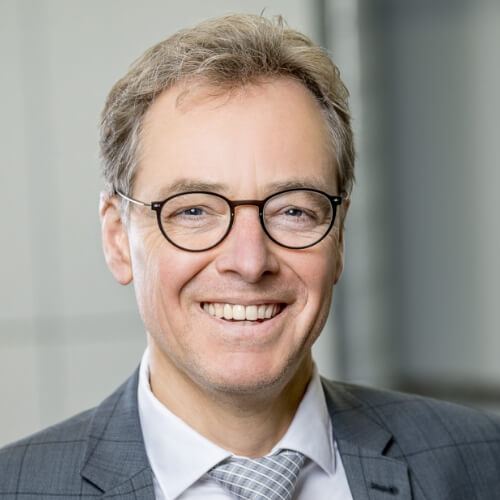
Prof. Ulrich Krupp
Steel Institute, Aachen University (DE)
Prof. Thierry Palin-Luc
I2M Bordeaux, Arts et Metiers Institute of Technology (FR)
Prof. Wolfram Fürbeth
DECHEMA Research Institute, Frankfurt am Main (DE)
B7 – Materials characterization, testing and mechanical properties
Scope
This symposium will gather a diverse audience from both academia and industry to share recent developments and best practice on materials’ characterisation method and mechanical simulation. Its broad scope will explore links between materials’ processing, microstructure and performance, with a focus on experimental and computational methods and their synergies. Contributions are welcome on studies at any length, although there is a particular interest at the macroscale. The organizers are particularly interested in investigations on extreme mechanical deformation and degradation mechanisms, process prediction and simulation (notably manufacturing processes) and novel experimental methods which replicate real world stress states and conditions.
Description
Producing and interpreting high quality experimental data and reliable models is central to the practical use of materials in engineering applications. Characterisation methods must enable the understanding of important physical behaviours of materials (physical, or functional properties or resistance to mechanical deformation, for example) in application-representative conditions. Moreover, the interpretation approaches should lead to the development and refinement of constitutive laws, enhancing the accuracy of predictive models and simulations. Simulations themselves will serve various purposes, such as informing design methods, updating operational models and facilitating the understanding of processing technologies, with characterisation data providing the foundational basis for these results. The vast range of environmental and loading conditions encountered across the span of engineering applications demands a multitude of characterisation and data interpretation methods which are capable of representing the true material state. This symposium will enable dissemination of novel specimen geometries, measurement methods, loading conditions and rates, and/or environmental states used by researchers to experimentally observe and/or verify and validate models. Furthermore, sessions will allow practitioners to discuss how data can be used in engineering analysis and indicate the benefits of representative characterisation approaches.
Targeted topics
- Impact of operational conditions such as high temperatures, corrosive environments or hydrogen embrittlement on materials’ behaviour
- Manufacturing process characterisation and simulation
- Small specimen testing methods
- Novel experimental methods for state visualization (diffraction methods, non-destructive techniques, large-scale facilities, in situ/operando methods, electron microscopy, mechanical tests)
- Simulation methods for enhanced material understanding
- Multiaxial material and strain path-dependent experimentation and behaviours
- Failure mechanisms and material degradation including crack initiation and propagation under creep, fatigue, stress corrosion, oxidation, etc.
- Fracture mechanics and damage tolerance
OrganizerS

Dr. Svjetlana Stekovic
Linköping University (SE)
Prof. Efthymios Polatidis
University of Patras (GR)
Dr. James Rouse
Univ ersity of Nottingham (UK)
Dr. Pearl Agyakwa
University of Nottingham (UK)
B8 – Hydrogen embrittlement of structural materials
Scope
Hydrogen plays a pivotal role in the global energy transition towards sustainability and decarbonization. Although rapidly evolving, hydrogen utilization as energy carrier still presents critical challenges related to storage and transportation. An outstanding problem in the mechanics of structural materials is Hydrogen Embrittlement (HE). It results in the severe loss of strength and deformability at hydrogen concentrations as low as 1 ppm.
Description
This symposium provides a venue for presentations of research progress on the fundamental origin of HE and hydrogen-material interactions, paying also attention to the prospects of hydrogen in the industry decarbonization.
Targeted topics
- Physical mechanisms causing embrittlement, modelling HE from the atomic to the meso-scale
- Hydrogen-metal interactions: hydrogen diffusion, trapping, hydrogen activity, etc.
- Advanced methods for hydrogen detection and characterization
- Relationships between hydrogen and microstructure, mechanical and performance properties, etc.
- HE mitigation actions (microstructure design, coatings, surfaces, etc.)
- Industrial and material challenges for hydrogen applications
- Prospects and innovative uses of hydrogen for the industry decarbonization
OrganizerS

Dr. Carola A. de Celada Casero
National Centre for Metallurgical Research (CENIM-CSIC) (ES)
Dr. Vera Popovich
TU Delft (NL)
Dr. Mahdieh Safyari
Lappeenranta University of Technology (FI)
B9 – Novel theory and data driven materials design for structural applications
Scope
The symposium features cutting-edge advancements and application of novel data-driven science and computational techniques in the development of structural materials. Contributions are welcome from the fields of metallic materials, polymers, ceramics and composites.
Description
AI and data-driven technologies bear the potential of revolutionizing the development of new materials as well as the performance optimization of traditional materials. The application of these techniques paves new ways of screening the compositional and process parameter spaces for optimum combinations of structural properties. The symposium on novel theory and data-driven materials design invites contributions from, but are not limited to …
Targeted topics
- Artificial intelligence for boosting atomistic modeling
- Fast and ultra-fast algorithms supported by AI
- High-throughput screening of materials properties
- Data-driven properties and performance prediction
- Accelerated materials discovery and innovation
- The future of AI in materials development
- Data-driven technologies in experimental materials design
- Accelerated materials design platforms
- Integration of experimental and computational methodologies
OrganizerS

Prof. Ernst Kozechnik
TU Wien (AT)
Dr. Wei Xiong
University of Pittsburgh (US)
Prof. Raymundo Arroyave
Texas A&M (US)
B10 – Construction Materials
Scope
The scope of this symposium is to bring together researchers to discuss the latest scientific progress on manufacture, processing, characterization, testing, durability, modelling and life-cycle assessment of Construction Materials. A significant part of the symposium will be dedicated to cement-based materials, although presentations dedicated to other construction materials and technologies are also welcome.
Description
Built environment has a well-known major environmental impact in terms of CO2 emissions, energy consumption, raw materials extracted and wastes generated. Innovation in the construction sector is becoming more and more important, to produce materials with higher performance, less environmental impact, multifunctionality. This includes, for example, resource-efficient manufacturing processes, novel binders, reuse and recycling of construction and demolition waste, multifunctional cement-based composite materials, self-monitoring and self-healing materials, innovative construction technologies, the extension of buildings service life, etc. Other experimental and theoretical contributions, related to construction and building materials and technologies, will also be part of the Symposium.
Targeted topics
- Progress on material manufacture
- Low carbon and sustainable construction materials
- Reuse and recycling
- Advanced multi-functional materials (self-healing, insulating, thermal storage, nano-composites, etc.)
- Alkali activated materials and novel binders
- Composite materials for construction sector
- Rheological properties
- 3D printed construction materials
- Novel characterization techniques
- Sensors and structural health monitoring
- Modelling and simulation techniques
- Artificial Intelligence applied to advanced materials
- Durability and service Life
- Life cycle assessment
- Cultural heritage and restoration materials
OrganizerS

Dr. Matteo Pavese
Politecnico di Torino (IT)
Dr. Marta Palacios
IETCC-CSIC (ES)